


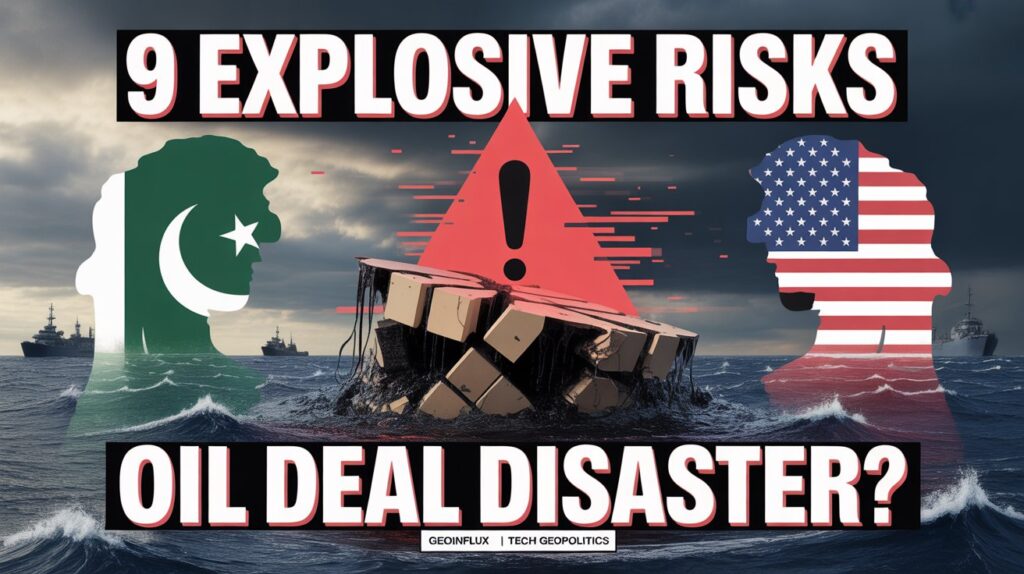
Artificial Island Risk in the Pakistan-US Oil Deal highlights 9 serious risks, including collapse, spills, and Maritime Security pressure with regional disaster impact.
What You Need to Know
Pakistan’s new Oil Exploration Strategy is gaining momentum following political support from the United States. Leaders claim the Arabian Sea holds major energy reserves, but the data is weak.
The plan depends on a new offshore platform that increases Artificial Island Risk because the seabed near the Sindh coast is unstable, storm-prone, and sensitive to seismic activity.
The region has a long record of structural failure and drilling problems. The 2019 Exxon Mobil attempt drilled more than 5,400 meters and cost over $100 million. It found no oil.
This history makes the new plan risky. A collapse or spill will not stay inside Pakistan’s Exclusive Economic Zone. It will reach shared waters and harm coastal communities, shipping routes, and marine life.
These risks place the entire Pakistan-US Deal under scrutiny. The plan also shapes wider Geopolitics in the Indian Ocean as regional governments track offshore safety, foreign engineering dependence, and Maritime Security pressure.
Also Read: pakistan nuclear threat from us soil
Why This Issue Matters
Pakistan is restarting offshore drilling as part of a new Oil Exploration Strategy. Officials hope this will reduce energy imports and support the economy. To make this possible, Pakistan Petroleum Ltd. is building an artificial island in the Arabian Sea.
This creates a high Risk because the seabed is weak, the region is prone to storms, and the structure requires precision engineering.
The push gained attention after US political statements suggested the existence of “massive reserves.” This created the sense of a strong Pakistan-US Deal, even though the geological record is poor. The biggest concern is Maritime Security.
A spill or collapse can affect several countries, not only Pakistan, which is why regional governments are watching closely. The plan fits into wider Geopolitics and will affect coastal communities across the region.
What Started This Plan
Pakistan depends heavily on imported fuel. Import costs are high and add pressure on the economy. A major offshore discovery would help, which is why officials promote the Oil Exploration Strategy even with weak geological evidence.
Interest increased after US leaders discussed large offshore energy reserves and closer cooperation. This created political momentum for a broader Pakistan-US Deal. But the region has failed many times.
The most recent attempt was the 2019 Exxon Mobil operation. It drilled deep but found no oil. It was Pakistan’s 17th or 18th failed attempt in the same area.
This shows a pattern. Political ambition pushes large projects even when the technical and environmental data are weak. This happens often in Tech Geopolitics, where technology-heavy projects are used to build partnerships or show influence. The offshore plan repeats this pattern and raises structural, financial, and environmental concerns.
What the Data and Risks Show
What Are the 9 Serious Risks in Pakistan’s Oil Exploration Strategy and EEZ Drilling Plan?
The offshore push brings nine major risks:
- unverified energy reserves
- Repeated drilling failures
- unstable seabeds
- strong waves and seasonal storms
- chance of offshore structural collapse
- High Artificial Island Risk
- Danger of an Oil Spill Disaster
- pressure on Maritime Security
- long-term foreign engineering dependence linked to the Pakistan-US Deal and wider Tech Geopolitics
Each risk adds uncertainty and cost. Combined, they show why experts call this a high-risk plan.
Why Is the Artificial Island Risk High in a Region Known for Offshore Structural Failure?
The artificial island is being built 30 kilometres from the Sindh coast. It is central to Oil Exploration. The Arabian Sea has soft seabeds, fast currents, and seismic activity. This puts the island at a clear Risk.
Artificial islands are costly and need advanced engineering. Even strong economies struggle with this. Japan’s Kansai Airport is situated on an artificial island constructed with high-end precision engineering; however, the island has sunk by more than 13 meters. Fixing it has cost more than $40 billion.
Pakistan faces a higher risk because the region is unstable and the project has limited engineering support. A collapse will trigger an Oil Spill Disaster that spreads quickly across shared waters. This puts coastal communities at risk and creates long-term environmental impact.
How Does the Pakistan-US Deal Increase Maritime Security Pressure Across Shared Waters?
Public statements from US leaders increased attention on the Pakistan-US Deal. This support helped push the Oil Exploration Strategy, but it also raised concerns for neighbouring countries.
A spill or collapse will not stay in Pakistan’s Exclusive Economic Zone. Water currents can carry oil toward India, Oman, and Iran. This creates direct Maritime Security pressure. It threatens fishing areas, shipping lanes, and coastal ecosystems. It may also cause disputes over cleanup responsibility and costs.
The offshore plan sits in a sensitive region where many countries depend on sea routes. Any failure has cross-border consequences, which is why regional governments are following the plan closely.
How Does Tech Geopolitics Shape Foreign Engineering Dependence in This Energy Push?
The artificial island and offshore systems require advanced monitoring, structural design, and safety equipment. Pakistan does not have enough precision engineering capacity to manage this alone. It depends on foreign companies, which increases long-term dependence.
Foreign partners influence budgets, safety rules, and crisis response. This makes the project part of wider Tech Geopolitics, where countries with stronger technology gain influence over others. The offshore push also diverts resources from solar and wind projects that are cheaper and safer.
This shows how the plan increases reliance on foreign engineering and shapes future decisions about security, energy, and diplomacy.
Strategic Insights / Implications
What Do These 9 Risks Mean for Policy, Power, and Markets?
- Policy: Shared waters need strong environmental checks. Countries must cooperate on projects with high Risk.
- Power: Political ambition, shaped by the Pakistan-US Deal, drives the project more than evidence. This adds tension in the region.
- Market: Repeated failures reduce investor trust. The plan shows weak planning and high opportunity costs.
Recap / Summary Table
What Are the Key Takeaways?
| Takeaway | Focus | Impact |
|---|---|---|
| Weak geological record | Oil Exploration Strategy | High failure chance |
| Collapse danger | Artificial Island Risk | Environmental damage |
| Spill impact | Maritime Security | Threat to shared waters |
| Political influence | Pakistan-US Deal | Regional pressure |
| Engineering gap | Tech Geopolitics | Long-term dependence |
FAQs
What Do People Ask Most About the Pakistan-US Oil Exploration Push?
Is Pakistan building an artificial island for offshore drilling?
Yes. Pakistan Petroleum Ltd. is building an artificial island about 30 kilometres from the Sindh coast. The structure will support around 25 wells under the new Oil Exploration Strategy. It is designed to allow nonstop drilling, but the seabed is unstable and exposed to strong waves and storms. This creates a high Risk. If the structure collapses, it may trigger an Oil Spill Disaster. The spill will not stay in Pakistan’s waters. It will move across shared areas, harm coastal communities, and raise Maritime Security concerns across the region.
Why did the 2019 offshore drilling attempt fail?
The 2019 Exxon Mobil attempt at the Kekra-1 well drilled more than 5,400 meters and cost over $100 million. It found no oil or gas and was declared “water wet.” This was Pakistan’s 17th or 18th failed attempt in the same region. The failure showed the geological weakness of the area. The new Oil Exploration targets the same location, which raises concern. Experts warn that past failures and weak data show the risks are high. This is why the Pakistan-US Deal is being questioned. The record suggests low chances of success and high financial cost.
Why is Maritime Security at risk in this new drilling plan?
A collapse or oil spill from the artificial island will spread beyond Pakistan’s Exclusive Economic Zone. Currents in the Arabian Sea move toward India, Oman, and Iran. A spill may harm fishing grounds, coral areas, and shipping lanes. This creates a major Maritime Security challenge. Coast guards and navies from multiple countries may need to respond. Cleanup work is expensive and slow. The region is already sensitive due to trade and military activity. A risky offshore structure increases tension and raises questions about regional emergency plans.
Is this project legal under UNCLOS, and why are neighbours worried?
UNCLOS allows countries to build artificial islands inside their Exclusive Economic Zones. The legal issue is not the main concern. The main worry is safety. Artificial islands do not receive territorial waters, and any Oil Spill Disaster from structural failure can cross borders without warning. This is why neighbours want Pakistan to manage the risk more carefully. If a spill reaches another country’s coast, that country must handle the environmental impact. This creates diplomatic strain and raises questions about responsibility, planning, and the long-term environmental cost.
How does this plan relate to Tech Geopolitics and foreign engineering dependence?
Offshore drilling and artificial island construction need advanced technology and precision engineering. Pakistan does not have enough local capacity to manage this alone. It depends heavily on foreign companies for design, equipment, and safety. This creates long-term foreign engineering dependence. The Pakistan-US Deal adds political weight to this dependence. This situation fits into wider Geopolitics. Countries with stronger technology gain leverage. The project also diverts money from local solar and wind projects that are safer and cheaper. These issues raise questions about the long-term direction of Pakistan’s energy system.
End Note
Pakistan’s offshore plan mixes political ambition with weak geological data and high engineering risk. The Artificial Island Risk and Maritime Security concerns show why the plan needs strict oversight. The region cannot afford a structural failure or spill that affects shared waters.
Related Reads
- Offshore drilling risks in the Indian Ocean
- Maritime security in shared waters
- Global artificial island failure cases
Thanks For Reading
Thanks for reading this analysis. Your support helps us break down complex topics in simple language.
— GeoInflux Editorial Team
Featured Sources & Citations
📘 Official Reports
🌊 Engineering
🔎 Energy
📰 Media & Analysis


