


Taiwan US military ties are deepening as tensions with China rise across the Taiwan Strait. Explore how new arms deals, joint exercises, and defense cooperation are reshaping Asia-Pacific security and challenging Beijing’s growing influence.
Taiwan is strengthening its military ties with the U.S. as tensions with China rise sharply across the Taiwan Strait. This renewed military cooperation reflects a larger defense strategy aimed at deterring Chinese aggression and reinforcing Taiwan’s security within the Asia-Pacific region.
In recent months, the U.S. has approved major arms deals for Taiwan, including advanced missile systems, upgraded F-16 fighter jets, and new naval platforms. These deliveries, combined with expanded joint exercises, are transforming Taiwan’s defense readiness and interoperability with U.S. forces.
Beyond weapons and training, both nations are deepening intelligence sharing and cybersecurity coordination — vital for tracking Chinese military movements and preventing cyber intrusions. Analysts say this marks a strategic evolution from transactional defense sales to a long-term security partnership.

For Washington, stronger Taiwan U.S. military ties fit squarely into its Indo-Pacific strategy, reassuring allies like Japan and South Korea while countering China’s growing influence. Yet Beijing has responded with warnings and intensified drills near the Taiwan Strait.
As military cooperation expands, the Taiwan-U.S. alliance is emerging as a key factor shaping the future balance of power in the Asia-Pacific.
Why Is Taiwan US Military Ties Enhancing with the U.S. Now?
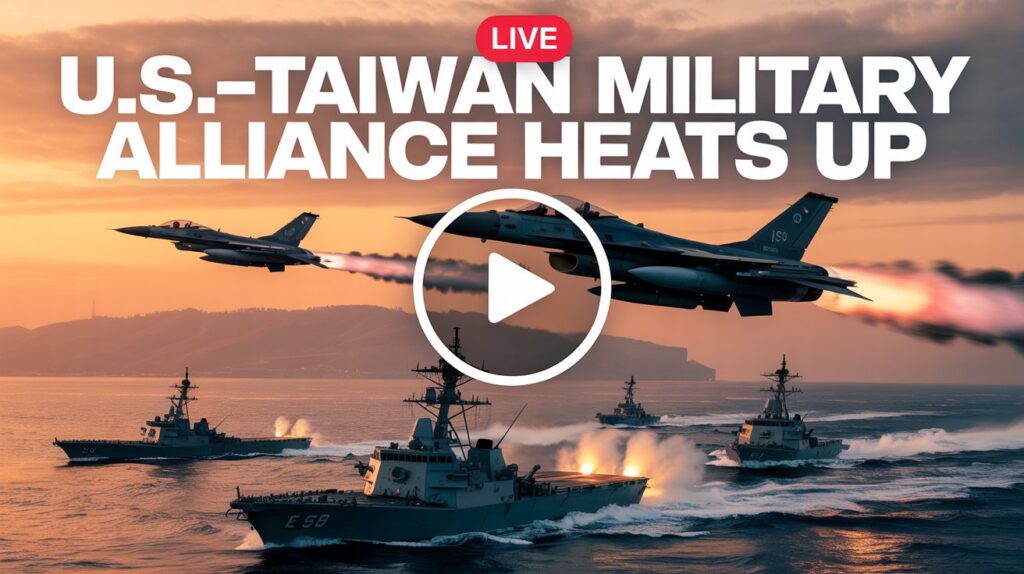
Taiwan has significantly stepped up its military partnership with the United States amid growing tensions in the Taiwan Strait. As Beijing continues aggressive manoeuvres, including large-scale naval drills and air incursions, Taipei seeks stronger defense support.
Enhanced military cooperation with the U.S. is central to Taiwan’s strategy to deter potential threats, modernize its defense capabilities, and reassure regional allies. This surge in collaboration includes arms sales, joint exercises, intelligence sharing, and cyber defense initiatives, marking a historic deepening of Taiwan-U.S. military ties.
What Are the Key Recent Developments in Taiwan US Military Ties?
- New Arms Deals and Defense Procurement
The U.S. has approved multi-billion-dollar arms sales to Taiwan, including advanced missile systems, fighter jets, and naval equipment. These acquisitions aim to enhance Taiwan’s air defense, missile deterrence, and maritime security, providing a credible counterbalance to Chinese military threats. - Joint Military Exercises and Training Programs
Taiwan and the U.S. have expanded their joint training initiatives, simulating scenarios ranging from air defense to amphibious operations. These exercises improve operational readiness, interoperability, and crisis response, sending a clear message to Beijing. - Intelligence Sharing and Cybersecurity Collaboration
Cybersecurity and intelligence sharing have intensified, enabling Taiwan to better track Chinese military movements and cyber threats. The partnership strengthens situational awareness and enhances Taiwan’s ability to respond to both conventional and hybrid warfare tactics.
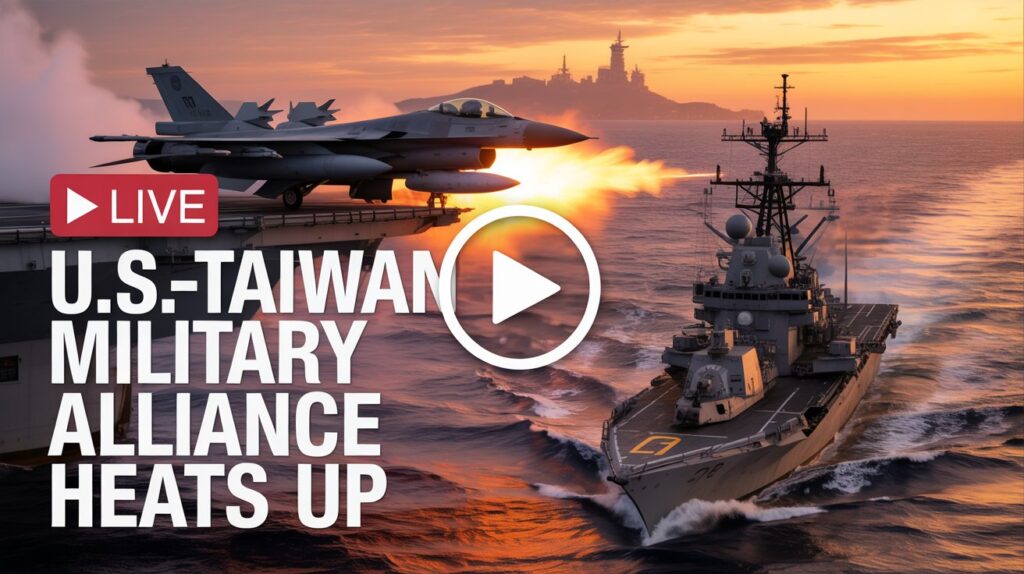
How Will Taiwan U.S. Military Ties Impact Taiwan’s Defense Capabilities?
Taiwan’s military modernization is accelerating. Advanced weapons systems, paired with U.S. training, enhance Taiwan’s ability to defend its airspace and maritime zones.
Improved intelligence capabilities allow Taiwan to preemptively identify potential threats, while joint exercises boost troop readiness. Collectively, these measures significantly increase Taiwan’s deterrence posture, reducing the likelihood of rapid escalation in the region.
What Is the Strategic Significance for the U.S.?
For the United States, strengthening Taiwan’s defense serves multiple strategic objectives. It maintains the balance of power in the Asia-Pacific, counters China’s growing influence, and reassures allies like Japan and South Korea. By supporting Taiwan militarily, the U.S. underscores its commitment to regional security and sends a strong signal of deterrence to Beijing.
How Is China Likely to Respond to Strengthened Taiwan U.S. Military Ties?
Beijing views closer Taiwan-U.S. military cooperation as a direct challenge. Anticipated responses include intensified military drills, diplomatic warnings, and economic measures targeting Taipei.
China may also increase its presence in the Taiwan Strait and accelerate its own defense initiatives, heightening the risk of regional instability.
What Are the Broader Implications for Regional Stability?
Stronger Taiwan-U.S. military ties influence the wider Asia-Pacific security environment. Neighboring nations like Japan, South Korea, and ASEAN members must recalibrate their strategies in response.
While U.S.-Taiwan cooperation deters aggression, it could also trigger a security dilemma where military posturing increases overall tension in the region.
Recap: Taiwan U.S. Military Ties at a Glance
| Development | Details | Strategic Impact |
|---|---|---|
| Arms Deals | Advanced missile systems, fighter jets, naval equipment | Enhanced defense and deterrence |
| Joint Exercises | Air defense, amphibious operations | Improved interoperability and readiness |
| Intelligence Sharing | Cybersecurity and military intelligence | Enhanced situational awareness |
| Strategic Deterrence | Modernized defense posture | Reduced likelihood of rapid escalation |
| Regional Signaling | Demonstrates U.S. commitment | Reassures allies, warns Beijing |
FAQs
1. What specific military equipment has the U.S. agreed to sell Taiwan?
The U.S. has approved sales including F-16 fighter jets, Patriot missile systems, advanced naval vessels, and surveillance equipment. These systems bolster Taiwan’s ability to defend airspace, coastlines, and critical infrastructure.
2. How do joint military exercises between Taiwan and the U.S. work?
Exercises simulate various scenarios, from air defense to maritime interdiction. They involve troop coordination, live-fire drills, and cyber defense simulations, enhancing both sides’ operational readiness and ability to respond to potential threats.
3. Is this escalation likely to trigger conflict in the Taiwan Strait?
While military tensions rise, joint exercises and arms sales are intended to deter, not provoke. Taiwan’s enhanced capabilities aim to make any aggressive action costly for China, lowering the probability of immediate conflict, though risk remains.
4. How does the international community view Taiwan U.S. military ties?
Allies in the Asia-Pacific generally support a stronger Taiwan defence, while Beijing and some nations view it as provocative. Global opinion is divided between supporting democratic resilience and maintaining regional stability.
5. What are the long-term implications for U.S.-China relations?
Stronger Taiwan-U.S. military ties complicate diplomatic relations, potentially fueling economic and military friction. However, strategic dialogue remains possible, as both powers manage tensions while avoiding full-scale confrontation.
Strategic Insights Taiwan U.S. Military Ties
Taiwan’s deepening military ties with the U.S. signal a pivotal moment in Asia-Pacific security. By combining arms acquisitions, joint training, and intelligence collaboration, Taiwan is strengthening its deterrence against potential threats while the U.S. reinforces its regional influence. The evolving dynamic will shape the strategic calculus for China, regional neighbours, and global powers in the years ahead.
Related Reads
- Indian Navy vs China Navy 2035: Why PM Modi’s INS Vikrant Warning Exposes a Growing Blue Water Threat | GeoInflux
- India’s Secret Weapon: DRDO Cracks PL-15E Tech for Astra Mark 2 , Reverse-Engineering | Geoinflux
- Pakistan Afghanistan Border Clash: 200+ Soldiers Dead,What Happened? Geoinflux Analysis.
References: Where Can Readers Learn More About Taiwan US Military Ties?
- U.S. Department of Defense – Indo-Pacific Strategy Report
- Taiwan Ministry of National Defense – Annual Defense Report 2024
- Congressional Research Service – Taiwan: Political and Security Issues
- U.S.-Taiwan Business Council – Defense Industry Updates
- Brookings Institution – Taiwan and U.S. Security Cooperation
- RAND Corporation – Deterrence and Defense in the Taiwan Strait
- The Diplomat – Taiwan’s Defense Modernization Efforts
- Reuters – U.S. Approves Latest Arms Sales to Taiwan
- Council on Foreign Relations – The U.S.-Taiwan Relationship
- Carnegie Endowment for International Peace – Taiwan and Regional Stability
Thanks for Reading
Thank you for reading this analysis on Taiwan–U.S. military cooperation and its broader geopolitical implications. Your engagement helps us continue exploring how global power shifts are reshaping regional security. If you found this piece insightful, share it with others and join the conversation in the comments section.— Written by Kushan Kislay | Published on October 24, 2025 Source: GeoInflux


