



Indian YouTube alternative is reshaping video streaming through Atmanirbhar Bharat technology, BharatNet infrastructure, and Indian video platform architecture. Discover 5 key breakthroughs driving digital sovereignty and local innovation in India’s creator economy.
Quick Take
India’s YouTube alternative is no longer a concept; it’s becoming a core part of the Atmanirbhar Bharat tech movement.
Indian video platform architecture is evolving rapidly, supported by BharatNet infrastructure, Indian cloud data centres like Reliance Cloud and Yotta, and Indic AI moderation.
These innovations reflect India’s push for digital sovereignty and a self-reliant video ecosystem that reduces dependency on foreign cloud and ad systems.
This architecture integrates regional AI, localized CDNs, and India-based monetization models — positioning Indian YouTube alternatives as strategic tools for both creators and national digital independence.
What Is Powering the Rise of the Indian YouTube Alternative?
India’s video economy has outgrown its foreign platforms. While YouTube still commands over 450 million users, reliance on U.S. infrastructure conflicts with India’s digital sovereignty goals.
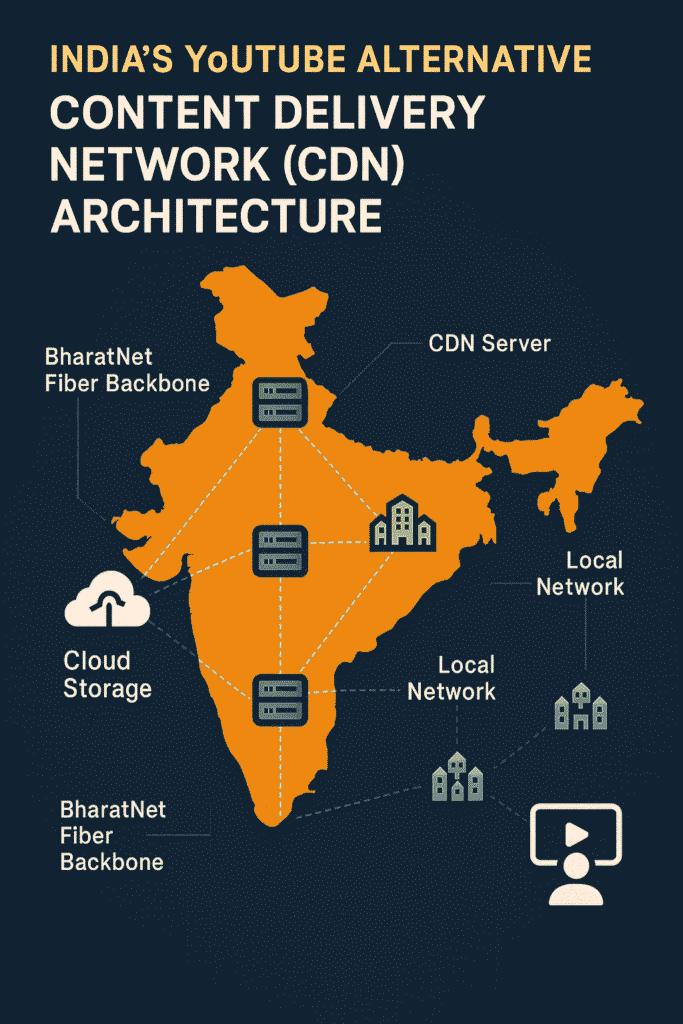
The government’s Atmanirbhar Bharat tech mission calls for:
- Localized Indian video platform architecture
- Use of domestic BharatNet infrastructure for faster data routing
- Data storage on Indian cloud providers like Yotta and Reliance Cloud
- Integration of Indic AI for moderation and recommendation
This new system creates a home-grown YouTube alternative that aligns with both creator needs and India’s long-term strategic interests. (Read more: Indian Alternative to YouTube: The Atmanirbhar Bharat Push)
How Does Indian Video Platform Architecture Work?
The backbone of the Indian YouTube alternative relies on a multi-layered architecture designed for sovereignty and scalability.
1. Cloud Infrastructure Layer
Indian platforms are hosted on sovereign cloud systems:
- Yotta NM1 handles large-scale video storage.
- Reliance Cloud connects CDN nodes via 5G networks.
- Sify and CtrlS enable compliance with India’s Digital Personal Data Protection Act.
This setup replaces AWS and Google Cloud dependencies while keeping all creator data inside India.
2. Content Delivery Network (CDN) Layer
CDNs form the delivery foundation of Indian video platforms:
- Jio Edge CDN ensures low-latency playback.
- Airtel IQ Video dynamically manages bandwidth.
- The BharatNet fibre network connects rural CDNs, expanding reach.
This structure lets Indian YouTube alternatives stream efficiently across states and languages.
3. AI and Recommendation Layer
AI defines personalization and safety. Platforms like Stage, Koo, and Chingari use:
- Indic AI models (AI4Bharat, Sarvam AI) for multilingual recommendations
- Federated learning to protect user data
- AI moderation tuned for India’s linguistic diversity
Together, these layers build an ecosystem built for India’s scale and cultural depth. To see how these technologies translate into real-world design and creator tools, explore our follow-up article — What Features Must Indian Video Platforms Offer to Rival YouTube and Strengthen Atmanirbhar Bharat’s Digital Sovereignty.
How Does AI Improve Moderation and Recommendation for Indian Video Platforms?
AI systems in Indian YouTube alternatives are localized for cultural context and compliance.
- AI moderation tools in India detect hate speech and misinformation in regional dialects.
- Indic NLP models identify tone and sentiment across Hindi, Tamil, Bengali, and Telugu.
- MeitY’s open data corpus supports training of ethical AI systems.
Unlike global models, Indian AI doesn’t outsource decisions; it’s built to understand the country’s social diversity.
How Does BharatNet Infrastructure Support India’s Video Platform Ecosystem?
BharatNet infrastructure is critical for India’s Atmanirbhar Bharat tech mission. It connects over 250,000 gram panchayats with fiber broadband, ensuring:
- Faster video uploads from rural creators
- Low-latency live streams for education and entertainment
- Seamless CDN distribution across tier-3 towns
This national network reduces the cost of data delivery and powers India’s digital sovereignty.
What Are the Key Challenges in Scaling Indian YouTube Alternatives?
- Scalability – Managing millions of streams under high bandwidth load.
- Cost of Data Transit – Domestic CDNs still lag in cost efficiency compared to global counterparts.
- AI Maturity – Indic AI needs more dialect training.
- Monetization – Indian ad-tech systems are developing but lack YouTube’s sophistication.
Solutions include inter-telecom partnerships, AI consortiums, and policy-linked incentives under Digital India 2.0.
Can India’s YouTube Alternative Compete Globally?
Yes, with the right mix of policy and tech innovation. Indian video platform architecture offers:
- Lower operational costs via localized CDNs
- Compliance with India’s digital sovereignty laws
- A model for other Global South nations
India is already exporting digital infrastructure like India Stack and UPI. The same playbook can extend to sovereign video tech, part of India’s digital diplomacy strategy outlined in Atmanirbhar Bharat tech exports.
Why Digital Sovereignty Matters for Indian Video Platforms
Digital sovereignty India isn’t only about security. It’s economic, cultural, and geopolitical.
Home-grown platforms ensure:
- User data stays within Indian jurisdiction
- Algorithms reflect Indian languages and norms
- Local creators gain control over their earnings
By re-engineering its digital pipelines, India is rewriting how nations assert online autonomy.
What’s Next for India’s Atmanirbhar Video Tech Ecosystem?
The next phase includes:
- ONDC integration for creator commerce
- AI moderation APIs standardized by MeitY
- BharatNet 2.0 upgrades for remote districts
- Open APIs under India Stack for media tech
If successful, India’s YouTube alternative could become the first sovereign video infrastructure model exported to emerging markets.
Recap: Inside Indian YouTube Alternative Architecture
| Layer | Function | Example | Strategic Impact |
|---|---|---|---|
| Cloud Infrastructure | Storage & Encoding | Yotta, Reliance Cloud | Data sovereignty |
| CDN Network | Video Delivery | Jio Edge, Airtel IQ | Low latency |
| AI Engine | Recommendation & Moderation | AI4Bharat, Sarvam AI | Indic personalization |
| Connectivity | Rural Access | BharatNet | Inclusion |
| Monetization Layer | Payment & Ads | UPI, ONDC | Creator empowerment |
FAQs
1. How does the Indian YouTube alternative differ from global platforms?
It’s built entirely on Indian video platform architecture using BharatNet infrastructure and Indic AI moderation, ensuring local data compliance and better reach in rural India.
2. What makes Atmanirbhar Bharat tech essential for video platforms?
It promotes digital sovereignty in India, enabling full data ownership, domestic revenue circulation, and innovation independent of foreign tech.
3. How does BharatNet strengthen India’s creator ecosystem?
BharatNet’s fibre backbone supports high-quality uploads from small towns, enabling new creators to join the digital economy.
4. Which AI models are used by Indian video apps?
Platforms deploy Indic AI models like AI4Bharat, Sarvam, and Koo’s internal NLP systems for recommendation, moderation, and automatic subtitling.
5. Can Indian YouTube alternatives expand globally?
Yes, especially across Global South countries. With Atmanirbhar Bharat tech and BharatNet infrastructure, India can export low-cost, high-performance streaming frameworks.
End Note
India’s YouTube alternative represents the perfect fusion of digital sovereignty, Atmanirbhar Bharat tech, and AI innovation. By localizing its video platform architecture, India is not only building apps—it’s shaping its geopolitical future through digital self-reliance.
(Parent Reference: Indian Alternative to YouTube: The Atmanirbhar Bharat Push)
Related Reads
- What Features Must Indian Video Platforms Offer to Rival YouTube and Strengthen Atmanirbhar Bharat’s Digital Sovereignty — Examines how user experience, monetization, and AI personalization define India’s home-grown YouTube alternatives.
- Indian Chip Startup Mindgrove Redefines Chip Design in India: Inside India’s First Fabless Semiconductor and IoT SoC Breakthrough 2025
- How India’s Semiconductor Design Ecosystem Is Localising the Chip Supply Chain
- Fabless Semiconductor Revolution: Inside India’s Chip Startup Boom
Thanks Note
Thank you for reading this GeoInflux Tech Geopolitics analysis. If you liked this breakdown, share your thoughts or tag @GeoInflux on Telegram, X, or LinkedIn.
— Kushan Kislay | GeoInflux | November 2025
References: India’s YouTube Alternative and Digital Sovereignty?
🗂️ Featured Sources & Citations
Official & Policy Reports
📘 Digital India Programme — MeitY (PDF)
📗 Atmanirbhar Bharat in Digital Infrastructure — PIB
📙 National Strategy for Artificial Intelligence — NITI Aayog
Infrastructure & Cloud Ecosystem
🌐 BharatNet Project Dashboard — BBNL
💾 Yotta Data Centers — Sovereign Cloud
⚙️ Reliance Cloud & Jio Edge Network
AI & Research Initiatives
🤖 AI4Bharat — Indic AI Lab (IIT Madras)
🧠 India Stack — Digital Public Infrastructure
Analysis & Media Coverage
📰 Economic Times — Atmanirbhar Push for Video Platforms
🗞️ The Hindu — Data Sovereignty and India’s Digital Policy
📄 TRAI — Cloud Computing Recommendations (PDF)
 2
2
 20
20
 20
20




Pingback: Breaking News: Is India Building An Indian Alternative To YouTube? The 5 Atmanirbhar Bharat Digital Strategy Explained GeoInflux
Pingback: Indian YouTube Alternative Features: 7 Powerful Ways Atmanirbhar Bharat Tech And Creator Monetization Are Driving Digital Sovereignty In India GeoInflux
Pingback: India Tech Ban 2025: 5 Shocking Impacts Of A U.S. Google-Instagram Ban | Zoho On Digital Sovereignty & U.S.–India Tech Competition GeoInflux