
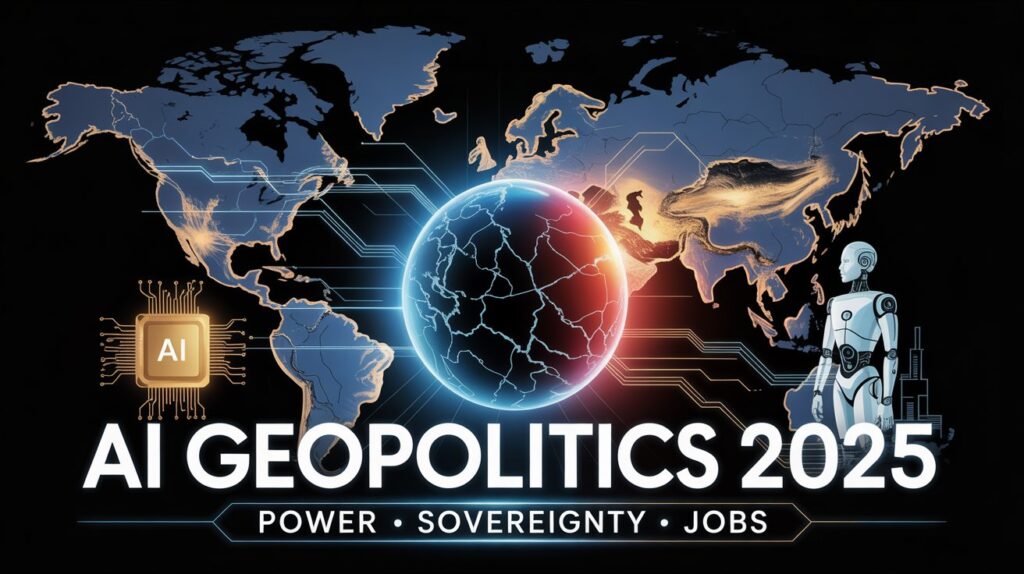

Artificial intelligence is no longer just a tech story. From the US-China race to chips and military strategy, here’s how AI is reshaping global power in 2026.
Quick Take
Artificial intelligence is becoming a strategic asset, not just a commercial technology. Countries are competing for advanced chips, computing infrastructure, AI talent, and industrial capacity because leadership in artificial intelligence increasingly translates into economic, military, and geopolitical influence.
Why AI Is No Longer Just a Technology Story
For years, artificial intelligence was discussed mainly as a business and innovation story. Better chatbots, smarter automation, faster analytics, and new productivity tools dominated the conversation.
That conversation has changed.
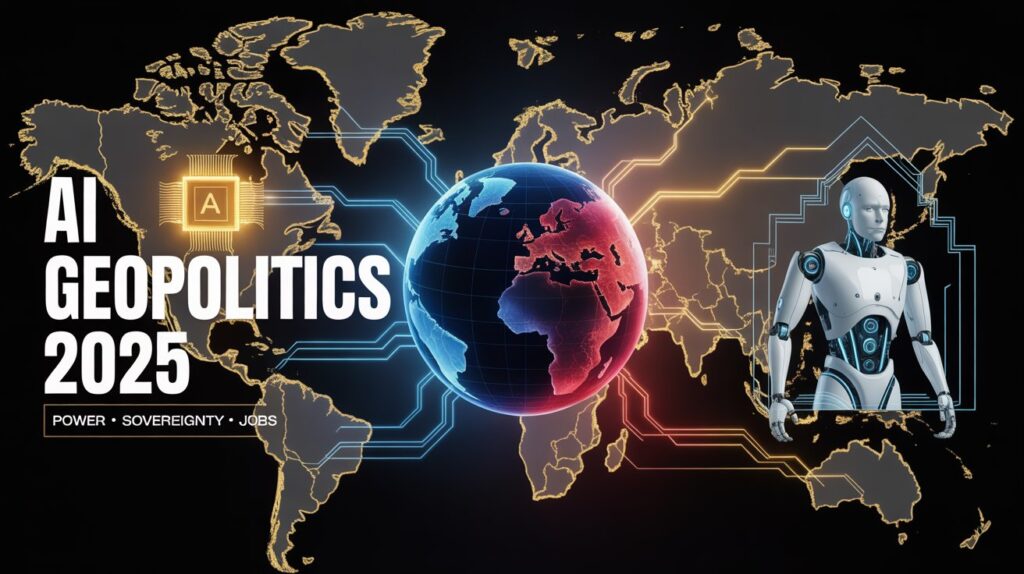
Governments now see AI as something far more strategic. It can strengthen military planning, improve intelligence analysis, accelerate industrial productivity, shape cyber defense, and influence global technological leadership. In other words, artificial intelligence is becoming part of how nations compete for power.
This shift fits into the broader transformation of technology into a geopolitical instrument. If you want the bigger picture, read our broader analysis on How Technology in Geopolitics Is Redefining Digital Sovereignty.
The reason AI matters so much is simple. Unlike many earlier software waves, modern artificial intelligence depends on expensive infrastructure, specialized hardware, advanced research ecosystems, and large-scale computing power. That naturally concentrates power in countries and companies that already control critical digital infrastructure.
This is no longer just about innovation. It is about strategic advantage.
Why the US and China Dominate the AI Race
When people talk about the global AI race, the United States and China dominate the conversation for a reason.
The United States currently holds a strong position because much of the world’s frontier AI ecosystem sits inside American technology infrastructure. Leading AI firms, cloud providers, semiconductor companies, and research institutions are heavily concentrated in the US. This gives Washington both economic and strategic leverage.
China has taken a different route. Its AI strategy combines industrial policy, state-backed investment, domestic ecosystem development, manufacturing strength, and long-term strategic planning. Beijing sees AI as a critical component of national competitiveness and technological self-reliance.
This competition matters because it shapes access for everyone else. Export controls on advanced chips, restrictions on strategic technologies, and shifting infrastructure partnerships increasingly affect how smaller countries participate in the AI economy.
The world is not simply watching an innovation race. It is watching a power contest. Read our broader analysis on The Dark Side of the US-China AI Race.
Why Chips and Compute Have Become the Real Battleground
Artificial intelligence may look like software on the surface, but underneath, it runs on infrastructure. Training advanced AI systems requires enormous computing power. That depends on high-performance semiconductor hardware capable of processing massive workloads efficiently.
Without access to those chips, AI ambitions remain limited. That is why semiconductors sit at the center of this competition. Export restrictions on advanced chips are not ordinary trade measures. They directly influence which countries can scale cutting-edge AI systems.
Compute access has become a strategic choke point. Cloud infrastructure makes this even more important. Many countries do not own enough domestic infrastructure to train or deploy advanced AI at scale. That creates dependence on a small number of global providers.
If you want to understand this infrastructure race better, our breakdown of India’s Semiconductor Mission and our analysis of Chip Geopolitics and India’s Strategic Position offer useful context.
The AI race is increasingly a contest for control of infrastructure, not just software innovation.
How AI Is Changing Military and Security Strategy
Artificial intelligence is also changing national security thinking. Military institutions increasingly see AI as a capability multiplier. It can improve intelligence analysis, speed up surveillance interpretation, optimize logistics, strengthen cyber defense, and support faster operational decision-making. These advantages matter in modern conflict environments where speed and information are critical.
Cybersecurity is another important front. AI helps identify threats faster, detect anomalies more efficiently, and improve automated response systems. But these capabilities also create offensive risks, because adversaries can use similar tools for cyber operations and influence campaigns.
This creates a difficult strategic balance.
Countries that move too slowly risk losing capability advantages. Countries that move too aggressively face governance, safety, and escalation concerns. This tension explains why AI is increasingly part of defense planning.
Where Does India Fit in This AI Competition?
India is not yet competing directly with the United States or China at the frontier AI level. But that does not mean it lacks strategic opportunity.
India has strong engineering talent, expanding startup ecosystems, world-class digital public infrastructure, and growing policy attention toward strategic technology. Its biggest challenge is infrastructure.
Frontier AI development depends on advanced computing, semiconductor access, large-scale cloud infrastructure, and sustained investment. India still relies heavily on external technology ecosystems in several of these areas.
That creates both vulnerability and opportunity. Read our in-depth analysis on the Challenges faced by India to achieve AI Sovereignty.
India may not need to replicate Silicon Valley or China’s model exactly. It can build strengths in applied AI, multilingual systems, public digital innovation, enterprise deployment, and strategic partnerships.
Private infrastructure investment also matters here. Google’s growing AI infrastructure presence in India is worth tracking as foreign firms increasingly shape domestic digital capacity.
The Risk of AI Dependence
One of the least discussed aspects of artificial intelligence is strategic dependency. If a country relies entirely on foreign AI platforms, external cloud infrastructure, imported compute resources, and proprietary ecosystems, its long-term strategic flexibility becomes weaker. This creates multiple risks.
- Access risk is the most obvious. During geopolitical tension, access to critical infrastructure or technology may become uncertain.
- Economic dependency is another concern. Countries that remain only consumers of foreign AI may struggle to build domestic innovation ecosystems.
- Policy dependency matters too. If core AI capabilities depend on external platforms, regulatory flexibility becomes harder to exercise in practice.
This does not mean every country must build frontier AI independently. But excessive dependence creates clear strategic vulnerabilities.
What Happens Next?
The global AI race is still in its early stages. The next phase will likely be shaped by semiconductor access, compute infrastructure, AI governance, strategic alliances, and the growing role of private technology firms.
Some countries will lead frontier innovation. Others will dominate the infrastructure. Some will specialize in regulation or applied deployment. But one thing is becoming clear. Artificial intelligence is no longer simply a technology sector. It is becoming part of the global power equation.
End Note
Artificial intelligence is no longer confined to research labs or startup product launches. It is becoming part of how nations build influence, secure strategic advantage, and shape the next phase of global power competition.
FAQs
Is artificial intelligence now a geopolitical issue?
Yes. AI increasingly affects military capability, economic competitiveness, cybersecurity, and strategic influence.
Why are semiconductors so important for AI?
Advanced AI systems require specialized chips for training and deployment. Without them, large-scale AI development becomes difficult.
Can India become an AI power?
India has strong potential in applied AI and infrastructure-led growth, but compute access and semiconductor dependence remain major challenges.
Does AI mainly benefit powerful countries?
At the frontier level, yes. But smaller countries can still build strengths in regulation, deployment, and niche innovation.
Is AI dependence a national security risk?
Yes. Heavy reliance on foreign AI infrastructure can create access, policy, and long-term strategic vulnerabilities.
Related Reads
- How Tech Geopolitics Is Redefining Digital Sovereignty
- India’s Semiconductor Mission: Can India Build a Real Chip Ecosystem?
- Chip Geopolitics Explained: Why Semiconductors Are the New Strategic Battleground
Google’s AI Infrastructure Push in India: Strategic Opportunity or Dependency Risk?
Featured Sources & References
📘 Official Policy Sources
- The White House | Artificial Intelligence Policy & Strategy
https://www.whitehouse.gov - US Bureau of Industry and Security | Export Controls & Strategic Technology
https://www.bis.gov - European Commission | Digital Strategy & Sovereignty Framework
https://digital-strategy.ec.europa.eu
🧠 AI Industry Sources
- NVIDIA | AI Infrastructure and Accelerated Computing
https://www.nvidia.com - OpenAI | Frontier AI Research and Platform Development
https://openai.com - Google AI | Research, Models, and Infrastructure
https://ai.google
🌍 Strategic Research
OECD AI Policy Observatory
https://oecd.ai
CSIS | Strategic Technology and Geopolitical Analysis
https://www.csis.org
Brookings Institution | AI Governance and Strategic Policy Research
https://www.brookings.edu
 2
2
 20
20
 20
20