


China just cracked the Thorium Reactor! MSR breakthrough could give it total Energy Independence and shift Tech Geopolitics.
Quick Take
China has successfully used its Molten Salt Reactor (MSR) to turn thorium into uranium, marking a major milestone in nuclear energy. This Thorium Reactor achievement is safer than traditional reactors, produces less nuclear waste, and uses China’s abundant thorium instead of imported uranium.
This breakthrough helps China move toward Energy Independence, meaning it won’t rely on other countries for nuclear fuel. It also strengthens China’s position in global Tech Geopolitics, allowing it to influence technology and energy trade worldwide.
India, which has large thorium reserves, will need to rethink its energy strategy to stay competitive. The global race for Thorium Reactor is heating up, with countries trying to develop safer, cleaner nuclear energy that supports climate goals. Small MSRs can be built faster and in more places, giving more nations access to high-density power.
China’s success shows how Reactors are shaping the future of energy.
China’s MSR Breakthrough: Why Thorium Reactors Matter
China has made a huge leap in nuclear energy. Its Molten Salt Reactor (MSR) can now turn thorium, a widely available metal, into uranium that can produce electricity. This Reactor’s achievement could change how countries generate energy and how they compete globally.
Thorium is safer than uranium and creates much less nuclear waste. In this article, we will explain China’s breakthrough, why it matters for global energy and Geopolitics, and what it means for countries like India that also have large thorium reserves.
Related News Analysis:
- Future of IT Jobs in India 2025: Anthropic AI Index Reveals 3 Alarming Automation Trends | Geoinflux
- Apple’s iOS 26.1 Update: 9 iPhone New Features, Critical Security Fix, and a Global Digital Sovereignty Showdown | Geoinflux
- Stunning Apple iOS 26.1 Update 2025: The Truth Behind Liquid Glass Design, iPhone New Features, and Apple’s Bold Security Push
- Apple iOS 26.1 Update 2025: Why India Still Lacks Support in New Apple Intelligence Languages and Digital Sovereignty Policy
How Thorium Reactors Are Changing Global Tech Geopolitics
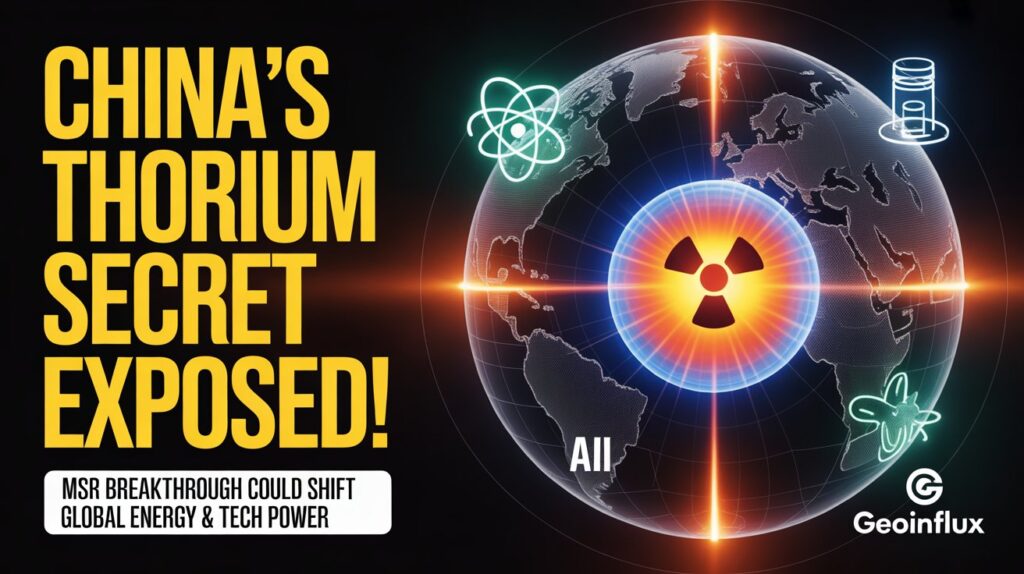
Thorium Reactors are becoming very important because countries want more clean and reliable energy. Most nuclear reactors today use uranium, which is controlled by a few countries like the U.S., Canada, and Australia. This gives those countries power over the energy security of others.
Thorium, on the other hand, is three to four times more common than uranium, especially in China and India. By using thorium, countries can rely on their own resources rather than imports. Molten Salt Reactors (MSR) are safer and produce less radioactive waste than traditional uranium reactors, making them a better choice for the future.
Because thorium is abundant and reactors are safer, these Thorium Reactors give nations a chance to achieve Energy Independence, reducing dependence on foreign energy suppliers.
How China’s Molten Salt Reactor Turns Thorium into Uranium
China’s MSR uses a liquid form of fuel instead of solid uranium rods. Inside the reactor, thorium-232 absorbs neutrons and slowly turns into uranium-233, which can then fuel the reactor and produce electricity. This process, called breeding, means the reactor can make more fuel than it consumes.
One of the best parts of this technology is safety. If something goes wrong, a “freeze plug” melts, allowing the liquid fuel to flow into a safe container, stopping the reaction automatically. This reduces the risk of accidents compared to traditional reactors.
In addition, the MSR produces much less long-lasting radioactive waste, making Thorium Reactors cleaner and more sustainable than conventional nuclear systems.
What China’s Thorium Success Means for Global Energy Independence
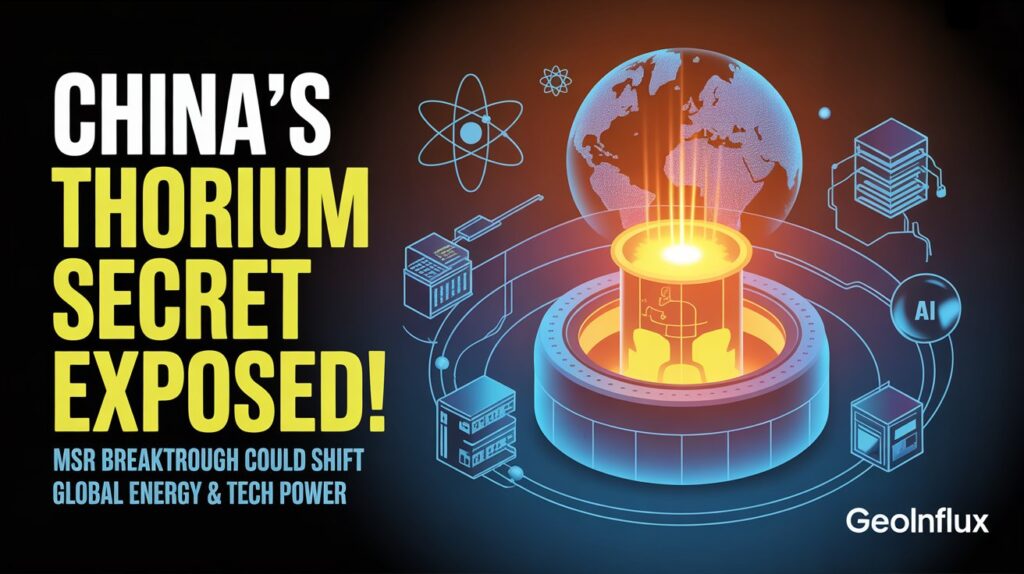
China’s breakthrough gives it control over its nuclear fuel supply, meaning it won’t need to buy uranium from other countries. This strengthens its national energy security and makes it more independent. The technology also allows China to export Reactor systems to other countries with thorium reserves, helping them achieve Energy Independence too.
This could create new energy partnerships, shifting the balance of global energy power. As more nations adopt thorium technology, the world may move toward a cleaner, safer, and more reliable energy system.
How India’s Thorium Reactor Program Fits Into the Global Race
India has its own three-stage nuclear plan. First, it uses normal reactors to produce plutonium. Then it uses fast breeder reactors to produce more fuel and uranium-233 from thorium. Finally, it plans to use advanced Thorium Reactors to create a fully self-sufficient nuclear system.
India has been slower because of past sanctions that limited access to technology. But India still has one of the largest thorium reserves in the world. With China moving quickly, India will need to accelerate its thorium research to stay competitive in the global nuclear energy race.
Why the MSR Breakthrough Matters for World Energy, Policy, and Technology
China’s MSR success is not just about energy; it changes global power. Western countries may need to update old nuclear rules to allow MSRs, or they risk falling behind. Thorium technology shifts energy power from uranium-rich nations to thorium-rich nations like China and India.
Economically, small MSRs are cheaper, faster to build, and can supply electricity to more locations. Technologically, countries that master MSR design and molten salt handling will gain a major advantage. This breakthrough is about energy, technology, and influence all at the same time.
How Thorium Reactors Could Shape Global Energy in the Future
The success of China’s Molten Salt Reactor (MSR) shows what the future of energy might look like. Thorium Reactors are safer, cleaner, and could provide almost limitless fuel for countries with thorium reserves. If more nations adopt this technology, we could see:
- Global Energy Independence: Countries won’t need to rely on imported uranium, reducing energy conflicts and price shocks.
- Faster Climate Progress: Cleaner nuclear power means fewer carbon emissions, helping fight climate change.
- New Tech Leaders: Nations that master MSR design and molten salt handling could dominate energy technology and influence global Tech Geopolitics.
- Smaller, Local Reactors: MSRs can be built in more places, allowing smaller countries or regions to produce their own high-density energy.
Overall, Thorium Reactors could redefine how the world produces and controls energy, making nuclear power safer, more sustainable, and a key driver of 21st-century geopolitics.
Recap
| Domain | What It Means | Why It Matters |
|---|---|---|
| Technology | MSRs are safe and powerful | Invest in Thorium Reactor technology |
| Geopolitics | China’s Thorium Reactor challenges the West | Energy power shifts to China and India |
| Policy | Old nuclear rules block MSRs | Governments need to update rules |
| Market | Thorium gives Energy Independence | More countries can access clean energy |
FAQs
What is a Molten Salt Reactor (MSR)?
MSRs use liquid fuel instead of solid rods. This makes them safer because the fuel can cool down by itself if something goes wrong, reducing the risk of a meltdown.
Why are Thorium Reactors important for Energy Independence?
Thorium can be turned into uranium inside a reactor. Countries with thorium can make their own fuel instead of buying uranium from others. This helps them control their energy supply.
Why does China’s MSR breakthrough matter for global tech power?
It challenges old energy rules, makes China independent, and could let it sell this technology to other countries. This strengthens China’s influence in global Tech Geopolitics.
How does India’s thorium program compare?
India has a long-term plan, but it’s slower. India still has a big chance to compete because of its large thorium reserves.
What’s the economic benefit of Thorium Reactors?
MSRs are smaller, cheaper, and faster to build. Countries that master this technology will have a big advantage in energy and tech.
References
- International Atomic Energy Agency. Status of Molten Salt Reactor Technology, Technical Report Series No. 489. IAEA, 2023. Download PDF (IAEA)
- Organisation for Economic Co‑operation and Development. Introduction of Thorium in the Nuclear Fuel Cycle: Short‑ to Long‑term Considerations. NEA No. 7224, OECD/NEA, 2015. Download PDF (OECD)
- International Atomic Energy Agency. World Thorium Occurrences, Deposits and Resources. IAEA, 2024. Access document (IAEA)
 2
2
 20
20
 20
20





Pingback: Indian Chip Startup Mindgrove Redefines Chip Design In India: Inside India’s First Fabless Semiconductor And IoT SoC Breakthrough 2025 GeoInflux
Pingback: India’s Semiconductor Design 2025: How Design Linked Incentives Are Driving A Bold Localisation And Fabless Innovation Wave GeoInflux